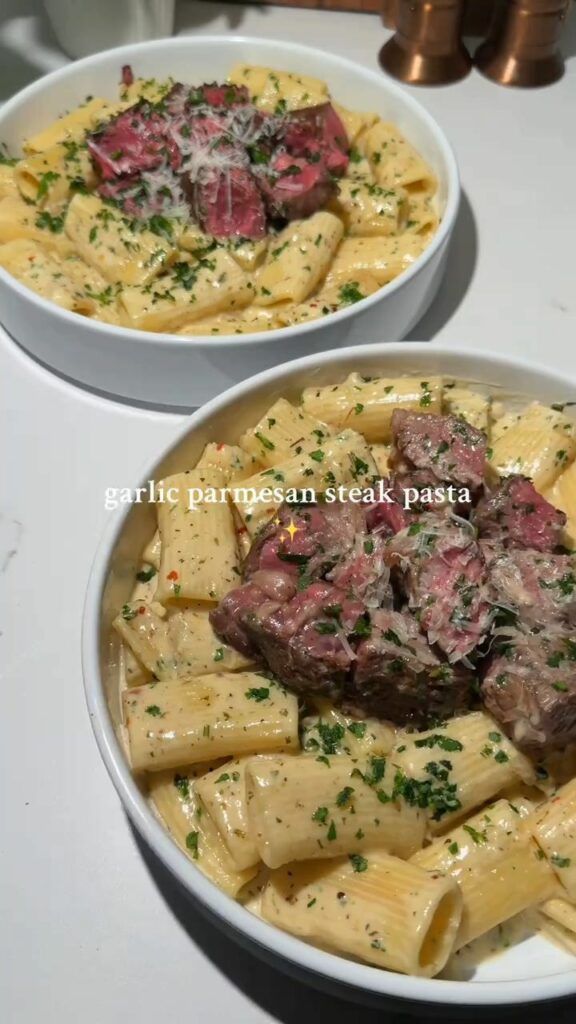
Garlic Parmesan steak pasta is what happens when you stop treating steak night and pasta night as separate events. You sear a thick strip steak to a hard crust, slice it thin, and fold it through penne coated in a cream sauce built from the browned bits in the pan. The result is a single dish that eats like two courses.
Advertisements1
The technique that matters most here is the reverse order of operations: pasta first, steak last. Steak needs to rest for at least five minutes after cooking so the juices redistribute rather than run onto the plate, and that rest window is exactly how long your sauce takes to come together. Nothing waits.
One clarification on terms, because it comes up: 'searing' means cooking a dry surface at high heat to create browning through the Maillard reaction, a chemical process that builds flavor compounds. It is not the same as cooking through, which is why the steak finishes off the heat while the sauce simmers. What this doesn't cover is a dairy-free version, since the sauce depends on real Parmesan and cream to thicken.
Why You'll Love This Recipe
About the Ingredients
12 oz (340 g) penne rigate
Rigate means ridged, and those ridges hold cream sauce far better than smooth tubes. Fusilli or rigatoni work as substitutes; avoid thin spaghetti, which lets the sauce pool at the bottom.
1 lb (450 g) strip steak, about 1 inch thick
New York strip has enough fat marbling to stay juicy after slicing. Sirloin is a leaner, cheaper substitute, but cook it 2 minutes less per side to avoid dryness.
1 1/4 tsp kosher salt, divided
Kosher salt crystals are larger than table salt, so measure by weight if you can. If using fine table salt, cut the amount by about a third.
3/4 tsp freshly ground black pepper
Fresh grinding matters here because pre-ground pepper has lost most of its aromatic oils. A coffee grinder reserved for spices works if you have no pepper mill.
2 tbsp olive oil
Use regular olive oil, not extra-virgin, since high heat mutes the delicate flavor of the expensive stuff. Avocado oil is a good high-heat substitute.
1 tbsp unsalted butter
Butter browns fast, so keep the heat moderate once it goes in. Salted butter works, but then reduce the added salt in the sauce by a pinch.
5 garlic cloves, minced (about 1 1/2 tbsp)
Buy firm, tight heads and avoid pre-minced jarred garlic, which tastes metallic when browned. Fresh garlic should feel heavy for its size.
1 cup (240 ml) heavy cream
Heavy cream is at least 36 percent fat and will not curdle when simmered. Half-and-half is a substitute only if you keep the heat low, since it splits more easily.
3/4 cup (75 g) finely grated Parmesan, plus more to serve
Grate it yourself from a wedge; pre-shredded Parmesan contains anti-caking starch that makes sauce grainy. Pecorino Romano is a sharper substitute.
1/2 cup (120 ml) reserved pasta water
This starchy water is the emulsifier that binds cream to pasta. Do not skip it, and do not rinse the pasta, which washes the starch away.
2 tbsp chopped fresh flat-leaf parsley
Parsley adds a clean, grassy finish against the richness. Basil is a sweeter substitute, but add it off the heat so it does not turn bitter.
Tips & Tricks
Dry the steak before searing
moisture steams instead of browning, so pat the surface thoroughly with paper towels and salt it right before it hits the pan.
Grate the Parmesan finely
coarse shreds clump into strings in cream, while a microplane or fine rasp melts into a smooth sauce.
Pull the steak 5 degrees early
carryover cooking raises the internal temperature while it rests, so remove it at 130 F (54 C) for medium-rare.
Add cheese off the heat
boiling cream can cause Parmesan proteins to seize, so stir the cheese in once the pan is off the burner.
Pro Tips
Step-by-Step Instructions
1. Boil the pasta
Bring a large pot of generously salted water to a rolling boil, add the penne, and cook 9 to 11 minutes until al dente, meaning it offers slight resistance at the center. Scoop out 1/2 cup of the water, then drain without rinsing.
2. Season the steak
Pat the steak completely dry with paper towels and season both sides with 3/4 tsp of the salt and the pepper. Let it sit at room temperature for 10 minutes while the pasta cooks so the interior cooks evenly.
3. Sear the first side
Heat the olive oil in a 12-inch skillet over high heat until it shimmers, roughly 400 F (204 C). Lay the steak in and leave it untouched for 4 minutes, until a deep brown crust forms and it releases from the pan on its own.
4. Flip and finish
Flip the steak and cook 3 to 4 minutes more, until an instant-read thermometer in the thickest part reads 130 F (54 C) for medium-rare. Transfer to a cutting board and rest 5 minutes; the surface should feel firm but spring back slightly when pressed.
5. Build the garlic base
Lower the heat to medium (about 300 F / 149 C), add the butter, and scrape the browned bits loose as it melts. Add the garlic and cook 45 seconds, just until fragrant and pale gold, not brown.
6. Simmer the cream
Pour in the heavy cream and bring it to a gentle simmer, about 200 F (93 C), then cook 4 to 5 minutes until it coats the back of a spoon and bubbles slowly at the edges. Stir in the remaining 1/2 tsp salt.
7. Melt in the Parmesan
Pull the pan off the heat, add the Parmesan in three handfuls, and whisk until each addition disappears before adding the next. The sauce should look glossy and pour in a slow ribbon.
8. Toss pasta and sauce
Return the pan to low heat, add the drained penne and reserved pasta water, and toss for 1 to 2 minutes until the sauce clings to every ridge and no liquid pools in the pan.
9. Slice and serve
Slice the rested steak against the grain into 1/4-inch strips, fold them into the pasta along with any board juices, and scatter with parsley and extra Parmesan. Serve immediately while the sauce is still loose.
Delicious Variations
Mushroom and thyme version
saute 8 oz sliced cremini in the skillet after the steak and add 1 tsp fresh thyme with the garlic for an earthier, meatier sauce.
Spicy Cajun twist
dust the steak with 2 tsp Cajun seasoning before searing and finish the sauce with a pinch of red pepper flakes for a Southern-leaning plate.
Lighter lemon-Parmesan take
swap half the cream for whole milk and stir in 1 tsp lemon zest off the heat for a brighter, less heavy sauce.
How to Store Garlic Parmesan Steak Pasta
Refrigerator
Store in an airtight container for up to 3 days; the pasta will absorb sauce, so keep 2 tbsp of extra cream or water to loosen it.
Freezer
Freezing is not recommended because cream sauces separate and the pasta turns mealy, though the cooked steak alone freezes well for up to 2 months.
Reheating
Reheat gently in a covered skillet over medium-low heat (about 275 F / 135 C) with a splash of water, stirring for 3 to 4 minutes until loose; avoid the microwave, which toughens the beef.
Frequently Asked Questions
Q: What cut of steak is best for steak pasta?
New York strip is the best all-around choice because its marbling keeps it juicy after searing and slicing. Ribeye is richer but fattier, and sirloin works if you cook it slightly less to prevent dryness.
Q: Why did my cream sauce curdle?
The sauce most often curdles when Parmesan is added over high heat, because the cheese proteins tighten and squeeze out liquid. Take the pan off the burner before stirring in the cheese and add it gradually.
Q: Can I make garlic Parmesan steak pasta ahead of time?
You can sear and slice the steak up to a day ahead and refrigerate it separately, but assemble the pasta fresh. Cream sauce thickens considerably as it cools, so the dish loses its silky texture when made in advance.
Q: How do I keep the steak from overcooking when I add it to the pasta?
Pull the steak off the heat at 130 F (54 C) for medium-rare and let it rest the full 5 minutes before slicing. Add the slices at the very end, off the heat, so they warm through without cooking further.
Q: What can I use instead of heavy cream?
Whole milk thickened with 1 tbsp cornstarch is the closest substitute, though the sauce will be thinner. Half-and-half works if you simmer it gently and never let it reach a hard boil.
If you make this garlic Parmesan steak pasta, note the temperature you pulled the steak at and how long the sauce took to coat a spoon. Those two numbers are the whole recipe, and they will be the same next time. Run the numbers twice.
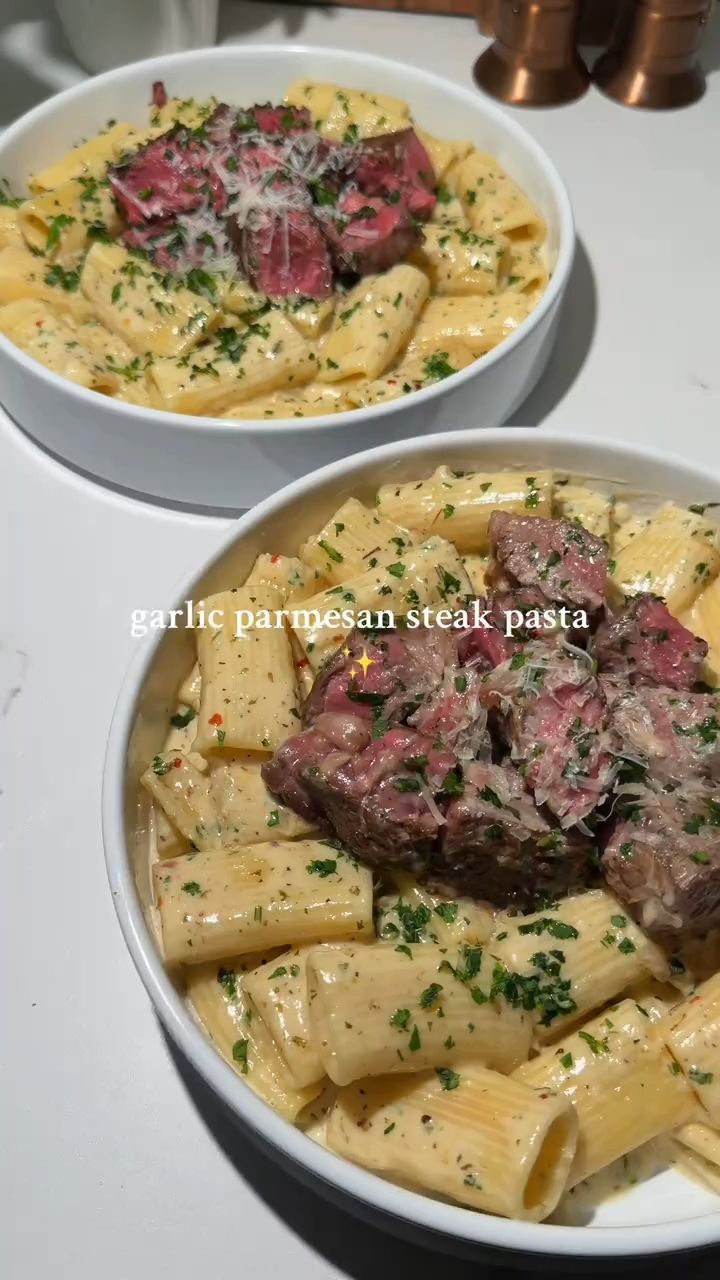
Garlic Parmesan Steak Pasta
Garlic Parmesan steak pasta pairs seared strip steak with a silky garlic-Parmesan cream sauce and penne for a restaurant-style dinner in one skillet.
🧂 Ingredients
- 12 oz (340 g) penne rigate
- 1 lb (450 g) strip steak, about 1 inch thick
- 1 1/4 tsp kosher salt, divided
- 3/4 tsp freshly ground black pepper
- 2 tbsp olive oil
- 1 tbsp unsalted butter
- 5 garlic cloves, minced (about 1 1/2 tbsp)
- 1 cup (240 ml) heavy cream
- 3/4 cup (75 g) finely grated Parmesan, plus more to serve
- 1/2 cup (120 ml) reserved pasta water
- 2 tbsp chopped fresh flat-leaf parsley
📋 Instructions
- 1Boil the pasta — Bring a large pot of generously salted water to a rolling boil, add the penne, and cook 9 to 11 minutes until al dente, meaning it offers slight resistance at the center. Scoop out 1/2 cup of the water, then drain without rinsing.
- 2Season the steak — Pat the steak completely dry with paper towels and season both sides with 3/4 tsp of the salt and the pepper. Let it sit at room temperature for 10 minutes while the pasta cooks so the interior cooks evenly.
- 3Sear the first side — Heat the olive oil in a 12-inch skillet over high heat until it shimmers, roughly 400 F (204 C). Lay the steak in and leave it untouched for 4 minutes, until a deep brown crust forms and it releases from the pan on its own.
- 4Flip and finish — Flip the steak and cook 3 to 4 minutes more, until an instant-read thermometer in the thickest part reads 130 F (54 C) for medium-rare. Transfer to a cutting board and rest 5 minutes; the surface should feel firm but spring back slightly when pressed.
- 5Build the garlic base — Lower the heat to medium (about 300 F / 149 C), add the butter, and scrape the browned bits loose as it melts. Add the garlic and cook 45 seconds, just until fragrant and pale gold, not brown.
- 6Simmer the cream — Pour in the heavy cream and bring it to a gentle simmer, about 200 F (93 C), then cook 4 to 5 minutes until it coats the back of a spoon and bubbles slowly at the edges. Stir in the remaining 1/2 tsp salt.
- 7Melt in the Parmesan — Pull the pan off the heat, add the Parmesan in three handfuls, and whisk until each addition disappears before adding the next. The sauce should look glossy and pour in a slow ribbon.
- 8Toss pasta and sauce — Return the pan to low heat, add the drained penne and reserved pasta water, and toss for 1 to 2 minutes until the sauce clings to every ridge and no liquid pools in the pan.
- 9Slice and serve — Slice the rested steak against the grain into 1/4-inch strips, fold them into the pasta along with any board juices, and scatter with parsley and extra Parmesan. Serve immediately while the sauce is still loose.