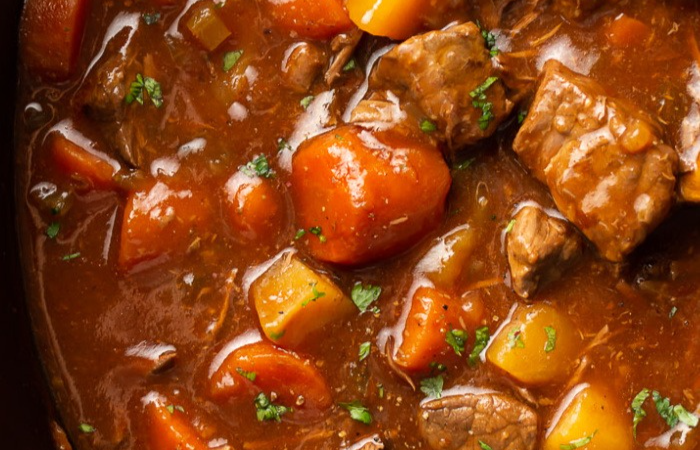
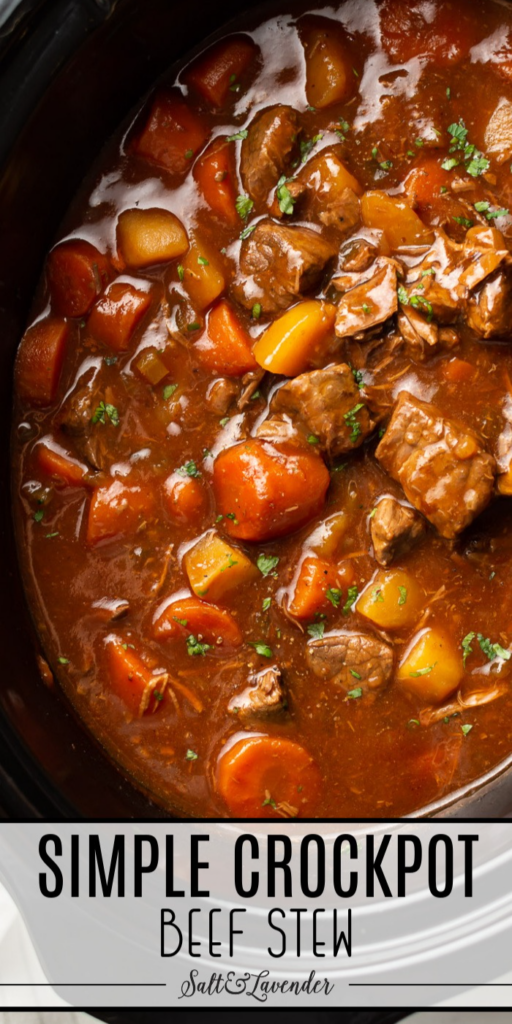
Crockpot beef stew is the dish I return to whenever the weather turns and my patience for standing at the stove runs out. The slow cooker does the work of a braise — low, moist, unattended heat that breaks down collagen, the tough connective tissue in beef chuck, into gelatin, which is what gives a good stew its glossy body rather than a thin broth. You get a pot of tender meat and vegetables for roughly fifteen minutes of actual effort.
Advertisements1
The one thing a slow cooker cannot do is brown your meat. Browning — the Maillard reaction, the chemical process that creates the deep roasted flavor on seared surfaces — needs dry, high heat, so I do that step in a skillet first. It is the difference between a stew that tastes flat and one that tastes like it simmered all day. Skip it and you will still eat well; do it and you will notice.
A note on what this does not cover: I am not addressing pressure-cooker conversions, gluten-free thickener ratios beyond the cornstarch option listed, or high-altitude timing adjustments. Those are separate problems with separate answers.
Why You'll Love This Recipe
About the Ingredients
2.5 lb (1.1 kg) beef chuck roast, cut into 1 1/2-inch cubes
Chuck is the right cut because its marbling and connective tissue melt into the sauce. If chuck is unavailable, boneless short ribs work well but need about an hour longer.
1 1/2 tsp kosher salt, plus more for seasoning
Kosher salt dissolves and seasons more evenly than fine table salt here. If you only have table salt, use about 1 tsp total, since it is denser.
1 tsp freshly ground black pepper
Fresh grinding matters more than people expect; pre-ground pepper has lost most of its aromatics. A coffee grinder reserved for spices works if you have no pepper mill.
3 tbsp all-purpose flour
Flour thickens the braising liquid into a proper gravy. For gluten-free, substitute an equal amount of cornstarch but whisk it into cold water first and add it in the last 30 minutes.
2 tbsp olive oil, divided
You need a high-smoke-point fat for searing. Avocado oil or refined canola are fine swaps; do not use butter, which burns before the pan is hot enough.
1 large yellow onion, diced (about 1 1/2 cups)
Yellow onion gives the sweetest, deepest base once cooked down. White onion is sharper; if using it, add a pinch of sugar while softening.
3 medium carrots, peeled and cut into 1-inch rounds
Carrots hold their shape over long cooking. If you prefer them firm, add them at the 4-hour mark instead of the start.
1 lb (450 g) Yukon Gold potatoes, cut into 1 1/2-inch chunks
Yukon Golds turn creamy without disintegrating. Russets will break down and cloud the gravy, which is fine if you like a thicker stew but changes the texture.
2 tbsp tomato paste
Tomato paste adds sweetness and body and helps brown the fond. Sun-dried tomato paste is a reasonable substitute at the same quantity.
3 cups (720 ml) low-sodium beef broth
Low-sodium lets you control the final seasoning. If using regular broth, reduce the added salt to 1 tsp and taste before serving.
1 tsp dried thyme and 1 dried bay leaf
Dried thyme holds up better than fresh over six hours. Fresh rosemary sprigs can replace the bay leaf if you prefer a piney note.
Tips & Tricks
Do not skip the sear
Browning in a hot skillet before the slow cooker is the single biggest flavor upgrade, and it takes eight minutes.
Layer root vegetables on the bottom
Potatoes and carrots sit under the meat, where the heat is most consistent and they cook evenly.
Thicken at the end, not the start
If the gravy looks thin, whisk 1 tbsp cornstarch into 2 tbsp cold water and stir it in for the last 30 minutes on High.
Season in stages
Salt the raw beef, then taste and adjust only after the stew is finished, since liquid reduces and concentrates salt over time.
Pro Tips
Step-by-Step Instructions
1. Pat and season the beef
Pat the cubed chuck dry with paper towels, then toss with 1 1/2 tsp kosher salt, 1 tsp black pepper, and 3 tbsp flour until evenly coated. Dry meat browns; wet meat steams, so this step matters.
2. Sear in batches
Heat 1 tbsp olive oil in a 12-inch skillet over medium-high heat (about 400 F / 205 C) until it shimmers. Sear half the beef for 3 to 4 minutes per side until deeply golden brown on two sides, then transfer to the slow cooker and repeat with the remaining oil and beef.
3. Soften onion and bloom paste
Lower the skillet to medium (about 350 F / 175 C) and cook the diced onion for 4 minutes until translucent and softened at the edges. Stir in the tomato paste and cook 1 minute until it darkens to brick red and smells sweet.
4. Deglaze the pan
Pour 1/2 cup of the beef broth into the skillet and scrape up the browned bits with a wooden spoon for about 60 seconds, until the liquid reduces slightly. This fond is concentrated flavor; do not discard it.
5. Build the slow cooker
Layer the carrots and potatoes in the bottom of a 6-quart slow cooker, then add the seared beef. Pour the onion mixture and remaining broth over the top, then add the thyme and bay leaf.
6. Cook low and slow
Cover and cook on Low for 6 to 7 hours or on High for 3 1/2 to 4 hours. The stew is done when the beef shreds under light pressure from a fork and the potatoes pierce easily with no resistance.
7. Thicken and finish
Remove the bay leaf and skim any surface fat with a spoon. If the gravy is thinner than you like, whisk 1 tbsp cornstarch with 2 tbsp cold water and stir it in; cook uncovered on High for 20 to 30 minutes until the liquid coats the back of a spoon.
8. Rest and serve
Turn off the slow cooker and let the stew rest uncovered for 10 minutes so the fat settles and the gravy tightens. Taste, adjust salt, and serve with crusty bread.
Delicious Variations
Red Wine Version
Replace 1 cup of broth with dry red wine and add it to the skillet after the onions to deglaze, which adds acidity and depth.
Mushroom and Barley
Add 8 oz sliced cremini mushrooms with the onions and 1/2 cup pearl barley at the start, plus 1 extra cup broth, for a heartier pot.
Smoky Paprika Stew
Stir 1 1/2 tsp smoked paprika into the tomato paste and finish with a splash of red wine vinegar for a warmer, smokier profile.
How to Store Crockpot Beef Stew
Refrigerator
Store in an airtight container for up to 4 days; the flavor improves by day two as the fat and starch settle.
Freezer
Freeze in portions for up to 3 months, leaving 1 inch of headspace; potatoes soften slightly on thaw but the beef holds well.
Reheating
Reheat gently on the stovetop over medium-low (about 300 F / 150 C) for 8 to 10 minutes, stirring occasionally, or microwave covered in 1-minute bursts.
Frequently Asked Questions
Q: Why is my crockpot beef stew tough?
The beef is almost certainly undercooked, not overcooked. Collagen needs sustained time above roughly 160 F (71 C) to break down, so give it another hour on Low and check again rather than assuming the cut was wrong.
Q: Can I put raw beef straight into the slow cooker?
Yes, it is safe, but you lose the browned flavor that makes this stew taste rich. If you are short on time, sear only one batch and accept a lighter result rather than skipping it entirely.
Q: Why is my beef stew watery?
Too much liquid went in, or the lid was lifted repeatedly and steam condensed back into the pot. Start with the listed 3 cups, keep the lid on, and thicken at the end with a cornstarch slurry.
Q: Do I need to brown the meat before slow cooking?
It is not required for safety, only for flavor. Skipping it produces a paler, milder stew; browning adds the roasted depth most people associate with a long-simmered version.
Q: Can I cook crockpot beef stew on High instead of Low?
Yes, use High for 3 1/2 to 4 hours, but Low gives noticeably more tender meat. High heat cooks faster without giving collagen the same gentle window to break down.
If you make this, brown the beef properly and leave the lid alone — those two habits do most of the work. Then run the numbers twice: taste once for salt, once for acid, and adjust before you serve.
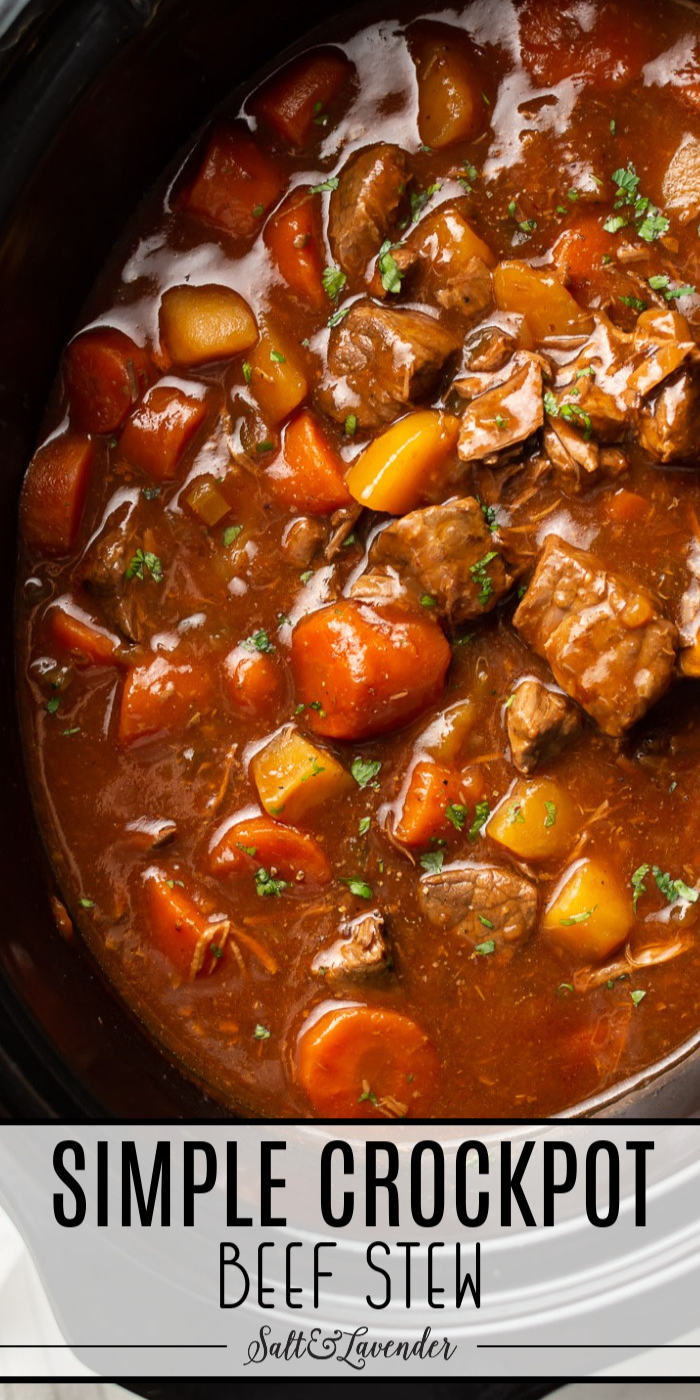
Crockpot Beef Stew
This Crockpot beef stew delivers fork-tender chuck, silky gravy, and root vegetables with 15 minutes of hands-on work and deep, slow-simmered flavor.
🧂 Ingredients
- 2.5 lb (1.1 kg) beef chuck roast, cut into 1 1/2-inch cubes
- 1 1/2 tsp kosher salt, plus more for seasoning
- 1 tsp freshly ground black pepper
- 3 tbsp all-purpose flour
- 2 tbsp olive oil, divided
- 1 large yellow onion, diced (about 1 1/2 cups)
- 3 medium carrots, peeled and cut into 1-inch rounds
- 1 lb (450 g) Yukon Gold potatoes, cut into 1 1/2-inch chunks
- 2 tbsp tomato paste
- 3 cups (720 ml) low-sodium beef broth
- 1 tsp dried thyme and 1 dried bay leaf
📋 Instructions
- 1Pat and season the beef — Pat the cubed chuck dry with paper towels, then toss with 1 1/2 tsp kosher salt, 1 tsp black pepper, and 3 tbsp flour until evenly coated. Dry meat browns; wet meat steams, so this step matters.
- 2Sear in batches — Heat 1 tbsp olive oil in a 12-inch skillet over medium-high heat (about 400 F / 205 C) until it shimmers. Sear half the beef for 3 to 4 minutes per side until deeply golden brown on two sides, then transfer to the slow cooker and repeat with the remaining oil and beef.
- 3Soften onion and bloom paste — Lower the skillet to medium (about 350 F / 175 C) and cook the diced onion for 4 minutes until translucent and softened at the edges. Stir in the tomato paste and cook 1 minute until it darkens to brick red and smells sweet.
- 4Deglaze the pan — Pour 1/2 cup of the beef broth into the skillet and scrape up the browned bits with a wooden spoon for about 60 seconds, until the liquid reduces slightly. This fond is concentrated flavor; do not discard it.
- 5Build the slow cooker — Layer the carrots and potatoes in the bottom of a 6-quart slow cooker, then add the seared beef. Pour the onion mixture and remaining broth over the top, then add the thyme and bay leaf.
- 6Cook low and slow — Cover and cook on Low for 6 to 7 hours or on High for 3 1/2 to 4 hours. The stew is done when the beef shreds under light pressure from a fork and the potatoes pierce easily with no resistance.
- 7Thicken and finish — Remove the bay leaf and skim any surface fat with a spoon. If the gravy is thinner than you like, whisk 1 tbsp cornstarch with 2 tbsp cold water and stir it in; cook uncovered on High for 20 to 30 minutes until the liquid coats the back of a spoon.
- 8Rest and serve — Turn off the slow cooker and let the stew rest uncovered for 10 minutes so the fat settles and the gravy tightens. Taste, adjust salt, and serve with crusty bread.

Priya writes explanatory essays about personal finance for people who find money talk exhausting. Her angle is demystification: she breaks down jargon, walks through real household decisions step by step, and admits where the standard advice falls short. She favors clarity over confidence and never pretends a topic is simpler than it is.